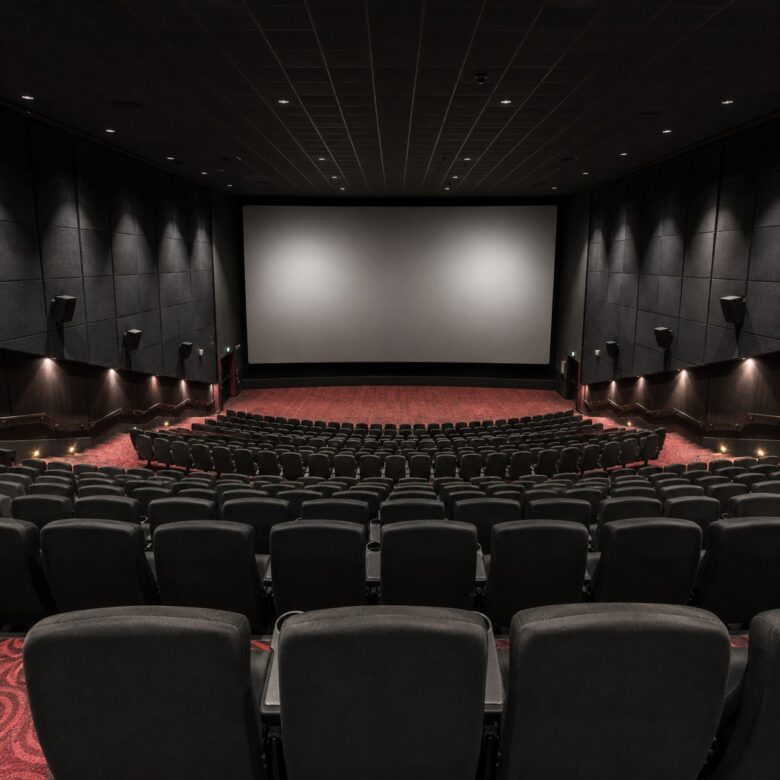
A 600-seat auditorium off Shaftesbury Avenue holds about 340 square metres of carpet and, on the night I last surveyed one properly, 211 pieces of chewing gum. I know the number because I counted them with a head torch and a piece of chalk at half past one in the morning, marking each one so the team could find it again.
Two hundred and eleven. At four minutes a piece that’s fourteen hours of labour before anybody touches a machine.
Venue carpet is a different trade from domestic work. The soil is different and the deadline is absolute. The economics push every decision towards whatever can be finished before doors.
What is on a venue carpet at the end of a Saturday night?
Sugar, mostly. That’s the headline difference from an office or a house.
Every spilt fizzy drink leaves behind a syrup that dries to a tacky film across the fibre and the backing. The dye may or may not be a problem. The sugar always is, because a sticky carpet grabs and holds every particle that lands on it afterwards, so a spill that looked minor in week one is a black patch by week six. Slushies are worse than cola by some distance – more sugar, more colour, more volume when they go over. Milkshake adds fat and protein, which means odour within about seventy-two hours in a warm auditorium.
Then there’s popcorn, which nobody thinks of as a cleaning problem. Cinema popcorn is popped in coconut or rapeseed oil and it sheds that oil onto every surface it touches. Aisle carpet in a busy multiplex carries a measurable oil load, and oil on polypropylene is a serious matter because polypropylene is oleophilic – it has an affinity for oils that it doesn’t have for water-based soil. Grey traffic lanes in a Wood Green screen that look like ordinary wear are usually oil holding fine dry soil in suspension.
The dry soil nobody counts
Somewhere between sixty and eighty per cent of what’s in a venue carpet is dry particulate. Crisp fragments, popcorn husk, salt, grit walked in off the pavement, fibres from clothing, hair.
None of it needs water. All of it needs a proper vacuum with a beater bar and enough passes, and it’s the single most neglected part of every venue cleaning specification I’ve ever read. Cleaning teams get twenty minutes per screen with a lightweight upright and a rota that assumes suction alone does the job. It doesn’t – dry soil sits down at the base of the pile and it needs agitation to lift. A screen that gets four slow passes across the aisle every night will still look presentable at year five. One that gets a single fast lap will be grey by year two, and no amount of wet cleaning after the fact recovers the difference, because by then the grit has abraded the fibre itself and abrasion doesn’t wash out.
How do you get gum off at scale?
Freeze it. Warm gum smears and drives deeper into the yarn; frozen gum goes brittle and shatters.
The consumable is a cryogenic aerosol, usually tetrafluoroethane, sprayed onto the gum for a few seconds until it goes white and hard. Then a blunt scraper – a bone tool or a stiff plastic spatula, never metal on wool – and the mass comes away in fragments. What’s left is a residue of gum base bonded into the fibre, and that needs a citrus solvent with d-limonene worked in with a brush and then flushed, or it sets again as a grey ghost that traps soil.
Four minutes a piece is a realistic average across a mixed auditorium. Some come off in ninety seconds. Some have been there since 2019 and been walked on ten thousand times, and those take a quarter of an hour.
Freeze or solvent first?
Freeze first, always, and I’ll argue with anyone who does it the other way. Solvent-first softens the mass and turns a discrete lump into a wide smear that has now contaminated four times the area it started with.
The exception is aged gum that has already been flattened into a hard black disc level with the pile – there’s nothing left to shatter, and that one goes straight to solvent and a lot of patience.
Where the gum is concentrated tells you something about the venue, too. Undersides of seat arms, the riser edges of each step, and the carpet immediately around the seat standard bolts where people’s feet rest. In a Romford multiplex I worked in, the back three rows carried more gum than the other fourteen combined, which surprised nobody who has ever worked in a cinema.
Which spilt drinks stain permanently and which don’t?
Coffee and tea are tannin stains. They respond to a mild acid and heat, and on a synthetic carpet they come out almost every time if they haven’t been left for six months to oxidise.
Beer is mostly a sugar and odour problem rather than a colour one. Red wine in a theatre bar is dye plus tannin, and fresh red wine on nylon is far more recoverable than the internet believes, provided nobody has poured white wine or salt on it first.
The genuine permanents are the artificial colours.
The blue slushie problem
Allura Red and Brilliant Blue, the FD&C colourants in slushies and sports drinks, are acid dyes. Nylon carpet has acid dye sites – free amine groups down the polymer chain – and an acid dye meeting a warm wet fibre is a dyeing process rather than a spill. The drink is dyeing your carpet in the same way the mill did, only with less control over where.
Once it’s set, ordinary cleaning will not touch it. What works is reduction bleaching: a sodium metabisulphite or hydrosulphite solution applied to the stain and driven with heat, usually a steam iron over a damp white towel, which breaks the chromophore and lifts the colour out. It’s a real technique with real risk – hold the iron too long and you’ll melt nylon, or strip the carpet’s own dye and leave a pale patch that’s more obvious than the blue was.
Plenty of contractors won’t do it. I think that’s the wrong call. A blue stain on the aisle of a 400-seat house is a defect the audience sees on their way in, and a competent operator with a test patch in a cupboard corner can lift eighty per cent of them. A contractor who won’t try has decided, on your behalf, that the carpet stays stained.
Solution-dyed polypropylene shrugs the whole thing off. Colour is locked into the polymer before the fibre is extruded, so there are no dye sites for anything to occupy. A slushie on solution-dyed fibre rinses out with water and a bit of agitation.
How do you clean a raked auditorium between shows?
The window is the constraint that decides everything else. A multiplex trading until one in the morning and opening at ten gives you maybe five usable hours including access and setup. A West End house with a Wednesday matinee gives you less, and a venue in a shopping centre in Beckenham gives you whatever the centre’s security team decides at eleven at night.
So the carpet has to be walkable before doors, which rules out anything that leaves it soaked. Low-moisture methods dominate for this reason rather than because they clean better – a bonnet or an encapsulation pass with a fast-drying polymer will be dry in forty minutes where extraction would need four hours with air movers running in a room full of soft furnishings.
The access problem in WC2
Truckmount hoses run to about ninety metres before vacuum lift falls off badly, and that’s the difference between a viable job and a portable-only one.
Around the Aldwych and Kingsway you are dealing with red routes, night-time loading windows and a stage door that opens onto a pavement two metres wide. There’s often nowhere to park the van within a hose run of the auditorium at all. Everything goes in on a trolley through a corridor with a step in it – backpack vacuums, a portable extractor with its own tank, hand tools for the risers.
Raked seating adds its own misery. You can’t run a rotary on a step. Every riser edge and every nosing is hand work with a small wand, and the nosings are also where the pile has worn thinnest, so they’re the bit that looks worst and takes longest. Budget an hour per twenty rows for the steps alone and you’ll be close enough to plan a shift around, which matters when the whole point is to be off site before doors.
What should venues be specifying instead?
Dark busy patterns. Every venue buys them and every venue buys them for the wrong reason.
A pattern that hides soil means nobody escalates until the carpet is beyond recovery, because the trigger for a deep clean in most venues is somebody in operations noticing it looks bad. Hide the signal and you get a carpet that gets its first proper clean in year four with four years of oil and sugar bonded into it. Plain mid-tones are a nuisance for a fortnight and honest for a decade.
Where the budget goes wrong
Most venue cleaning contracts I’ve seen put the money into periodic wet cleaning and almost nothing into daily dry soil removal. That’s backwards. Double the vacuuming time per screen and buy machines with proper brush agitation, and the periodic clean gets cheaper because there’s less to lift. The maths works out inside eighteen months on any site I’ve costed it for.
And the thing I’d rather you heard from me than from a flooring rep: if you’re respecifying an auditorium, put solution-dyed polypropylene in the aisles and circulation, keep wool for the front of house where it’ll be seen and looked after, and set up a real vacuuming regime. Do that and you’ll need my team maybe half as often as you do now.
The chalk marks were still on the carpet the next week. Nobody had swept them off.